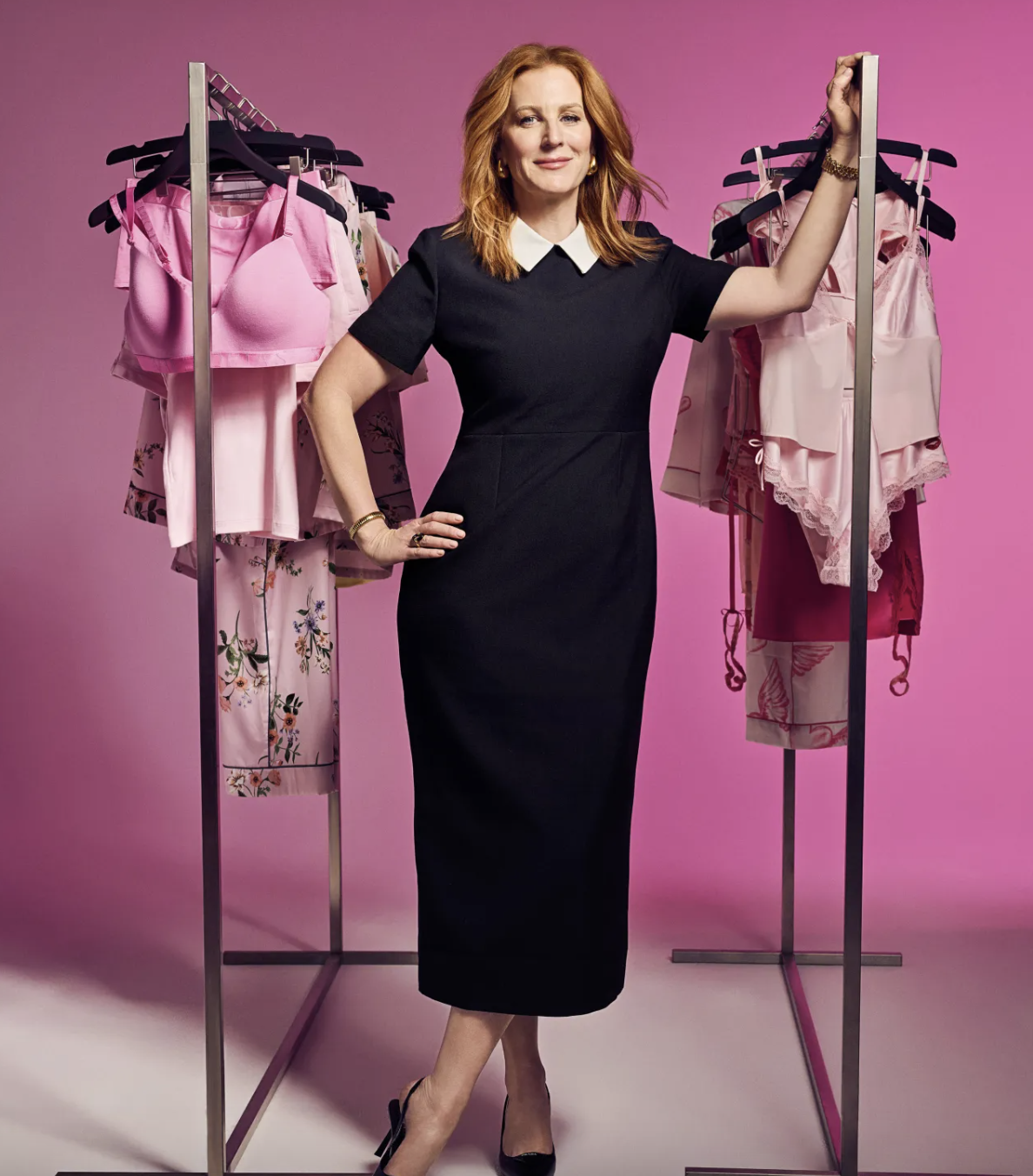
Spectacular. Fantastical. Unstoppable. Sexy. At Victoria’s Secret these are not just adjectives; they’re the emotions the nation’s leading intimates brand is trying to evoke in customers. “More than anything, we’re in the business of feelings,” says CEO Hillary Super.
But many women who grew up with the brand say it has fostered a very different set of feelings in them: Inadequate. Objectified. Fat-shamed. Invisible.
It may be hyperbolic to blame a seller of undergarments for a generation of women’s body issues, but it’s hard to overstate Victoria’s Secret’s clout in the 1990s and 2000s. In its heyday the brand—with its ubiquitous catalogs, boudoir-style shops, and glitzy runway show—played a key role in defining American beauty standards, promising women they could be bombshells like its famous models, known as Angels.
What some viewed as aspirational, others saw as harmful to the self-esteem of women and girls. Even worse for the business, the brand failed to evolve.
Victoria’s Secret & Co. brought on Super, a former CEO of Anthropologie and competitor Savage X Fenty, in the fall of 2024 after several ill-fated attempts to change the narrative. Super, 53, remembers that when she got the call, she was “keenly aware of what the perceptions of the brand were, positive and negative.” But her “first reaction was, ‘That’s the biggest transformation opportunity in retail,’” she says. Read the full feature here. And watch my sitdown interview with Super on Fortune’s YouTube channel.